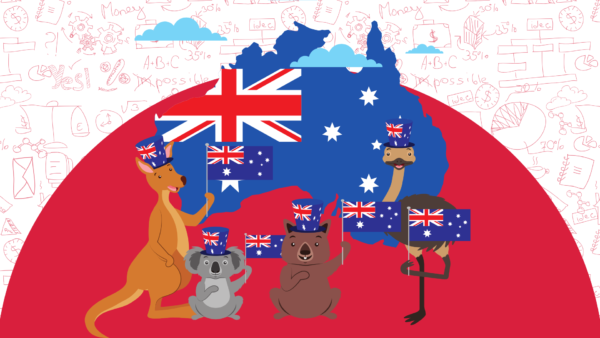
Beaches and sunshine or snow and mountains, Australia has got them all. From kangaroos, and quokkas to Chris Hemsworth and Hugh Jackman, Australia has something for people who enjoy nature, entertainment, socialising, shopping and food. You can use your academic breaks to explore the natural beauty and the complex cultural systems in different parts of Australia.
Australia’s New Migration Strategy – How does it affect international students?
As we mentioned at the start of this article, Australia’s new migration policy has been in the news. While there are numerous debates surrounding this move, let us look at some of the questions that are significant to us.
Is Australia still open to international students?
Yes, absolutely. A new applicant simply has to meet different criteria, compared to an older applicant. We have listed out the changes in detail below.
Why is Australia doing this?
Australia’s net migration reached a record high of about 510,000 last year, of which international students comprised a significant portion. This is a tremendous increase from the pre-pandemic level of 239,600 (migration in June 2019).
The policy aims to bring migration back to “sustainable levels”, reduce the cost of living, and ease the pressure on housing and property. The larger goal, simply put, is to increase the number of migrants who are highly skilled in areas where there is a shortage and reduce the intake of unskilled migrants. Besides Australia, Canada and Britain are also enforcing measures to ensure only genuine students are awarded a student visa.
What are the changes?
If you are applying for the Student visa (Subclass 500), then
- You must meet the Genuine Student requirement (GS) instead of the previous Genuine Temporary Entrant (GTE). The GS portion of your visa application requires you to answer questions on your current circumstances, justify your choice of course and university, and display your understanding of what study and life in Australia entails.
- You must meet the minimum English language requirement which has now been increased to 6.0 in IELTS or its equivalent.
- You must show proof of AU $29,710 in savings, to cover annual living costs.
For the Temporary Graduate Visa (Subclass 485)
- English proficiency test must be taken within a 12-month period prior to the application of the visa.
- Minimum IELTS score is 6.0 in each of the components.
- The age limit to apply for Subclass 485 visas has been reduced from 50 to 35 years.
- The duration of stay under this visa will be reduced depending on the degree and the skill shortages. No extension will be allowed except for applicants completing studies in a regional area.
The bottomline
As long as your application is strong and you are making a genuine attempt to pursue your higher education in Australia, the new policies will not hinder your dreams. As a working professional, it would also help your case if you can keep track of the skill shortages in the country for, there is also a Skills-in-Demand visa under the new scheme which will provide a clearer pathway to permanent residency. Reach out to us at TC Global to get more information.
Note: Information in this section is accurate as of 21 April 2025.
























![Best Universities in New Zealand for International Students [2025 Rankings]](https://tcglobal.com/wp-content/uploads/2025/09/Best-Universities-in-New-Zealand-for-International-Students-2025-Rankings-600x338.png)


